Product analysis
Checking the contents of Melanotan 2
The most revealing comparison in this file puts the stated amount beside the amount the laboratory could measure.
Stated amount, measured amount
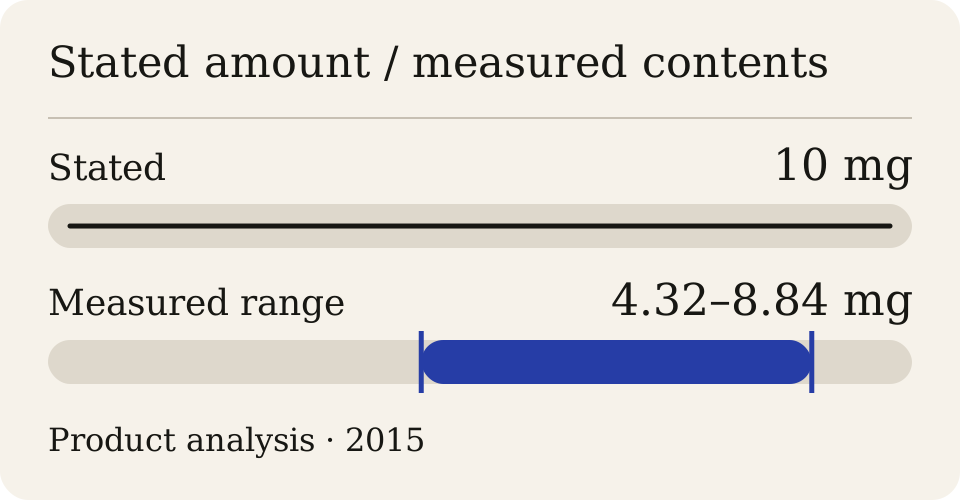
The LC-UV-MS/MS product analysis reported Melanotan II content of 4.32–8.84 mg where the stated amount was 10 mg. LC separates the mixture before the instruments examine its components. The long abbreviation is a reminder of how much work sits behind a short name.
These are product-content measurements from the samples in that study. They establish discrepancies in those products, with no basis for calculating a safe human amount. I trust this modest, answerable question more than a sweeping claim that every product carrying the name behaves alike.
Unidentified impurities
Vials from two of the three shops in that same analytical study contained unidentified impurities, reported at 4.1–5.9%. The word unidentified matters. It records a limit of the analysis rather than supplying a name, a toxic effect or a risk percentage for the person exposed.
I resist both convenient conclusions here. The detection of an impurity deserves attention; a percentage of impurity cannot be converted into a percentage chance of harm. Nor would the amount of the named peptide answer every question about the remaining material. Purity and content describe different properties.
Identification by mass spectrometry
In the 2021 forensic characterization, investigators examined eight unknown samples confiscated by police. Accurate-mass and fragmentation analysis identified Melanotan II and bremelanotide without reference standards. Mass spectrometry examines the masses of molecules and their fragments, helping distinguish substances that may look much the same to the eye.
The refusal to take identity for granted is the paper’s attraction for me. It answers a chemistry question about particular seized samples. That finding supplies no certification for a different batch, and no clinical safety assessment.
Falsified injectables
Operation Resistance found Melanotan II among falsified biopharmaceutical injectables in a European seizure survey. That is a different kind of evidence again: a view of material intercepted in an illicit supply chain. It strengthens the reason to ask about the material itself before arguing over its advertised effects.
Identity, quantity, impurity and sterility are separate questions. The analytical findings here address only what the reported methods measured. An answer about the other properties would need evidence of its own before I could accept blanket reassurance.
Even a perfectly identified molecule would retain the clinical concerns reviewed in the dermatology literature. The reported harms file covers those concerns, including the uncertainty about causation and long-term risk.